
Wolf Spiders vs. Brown Recluse
What spiders are actually found in Port St Lucie homes and businesses
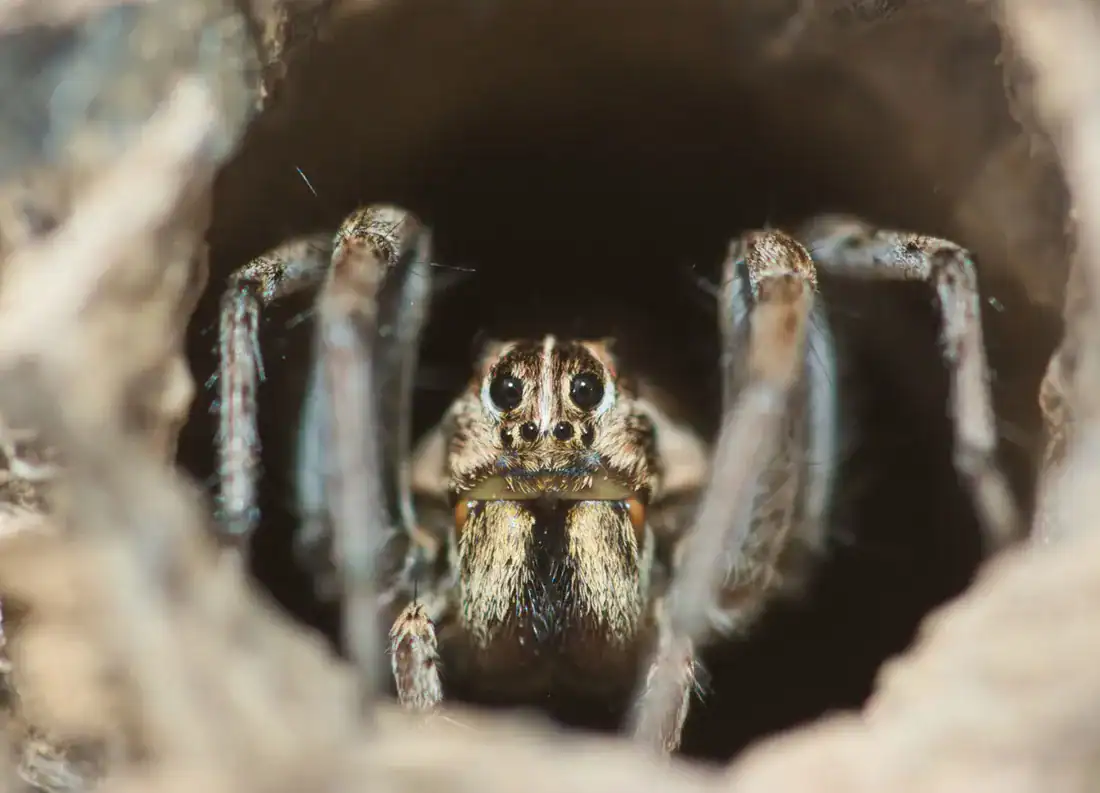
That Big Spider in Your Garage Probably Isn’t What You Think
We often get calls from concerned homeowners about large spiders. “I think this is a brown recluse, should I be worried?” If the client has already killed the offending arachnid, we will ask for a photo. (We are a small business, you can text us!)
The spider in the photo is big brown and ugly. Usually on the ground as opposed to in a web.
In nearly every case it is NOT a Brown Recluse. In Port St Lucie, it is almost always a variety of Wolf spider or Huntsman spider. And while I understand why she was concerned (both are brown and big), the difference between these spiders matters a lot.
Here’s what you need to know about the big brown spiders found in homes and businesses in Port St Lucie.
A note: New homes, particularly in Tradition, are notorious for having Black and Brown Widow Spiders in them, especially in the garage. If your home is new and the spider is in a web, it’s best to assume it is venomous.

Brown Widow spider feeds on a gecko in Tradition.
The Brown Recluse Myth in Florida
Let’s start with the spider everyone’s terrified of: the Brown Recluse.
Here’s the truth: Brown Recluse spiders are extremely rare in Florida. They’re not native here, and despite what you might have heard from a neighbor or read online, the chances of finding one in your Port St Lucie home are incredibly low. But don’t take our word for it, according to the University of Florida Entomology Department, “the chance of an interaction between Brown Recluse spiders and people in Florida is close to nil, agreeing with Verrer’s (2000) assessment”. These venomous spiders are primarily found in the central U.S.—states like Kansas, Oklahoma, Missouri, and Arkansas. While there may be occasional instances of isolated populations in the panhandle of Florida, confirmed sightings in South Florida are exceptionally rare. Usually related to a moving truck or the like being driven to our area from a place where recluse spiders are more prominent.
We’ve been doing pest control on the Treasure Coast for decades, and we can count on one finger the number of actual brown recluse spiders we’ve confirmed. Thankfully, all but 1 photo of a “brown recluse” spider sent in by a potential client has turned out to be wolf spiders, huntsman spiders, or occasionally a southern house spider.
Why does this matter? Because misidentifying a harmless spider as a brown recluse leads to unnecessary panic—and sometimes unnecessary pesticide use. More importantly, it can cause you to miss the spiders that actually ARE venomous and common in our area.
What You’re Actually Seeing: Wolf Spiders & Huntsman Spiders
If you see a large, brown, hairy spider in your Port St Lucie home – especially on the ground (as opposed to in a web) – it’s almost certainly a member of these two families of spider.
Wolf Spider in South Florida
Wolf spiders are common throughout Florida because they thrive in our warm, humid climate. They hunt insects at night and are particularly active during summer months. You’ll often see them near exterior doors or in areas where other bugs are present—they’re following the food.
Because they hunt, rather than building a web, they will be found where other insects (their potential prey) congregate. Because many insects are attracted to light, porch lights tend to create an all-you-can-eat buffet for these spiders. Turn exterior lights off to reduce wolf spider prevalence around your home.
Wolf Spider Characteristics:
- Size: Body length up to 1 inch, leg span up to 3 inches (yes, they’re big)
- Color: Brown to gray with darker markings, covered in short hairs
- Eyes: Eight eyes arranged in three rows—two large eyes in the middle
- Behavior: Fast runners, active hunters (they don’t build webs). They carry their babies on their back! Stepping on a mother can send hundreds of babies scattering.
- Habitat: Ground level—garages, closets, under furniture, near doors
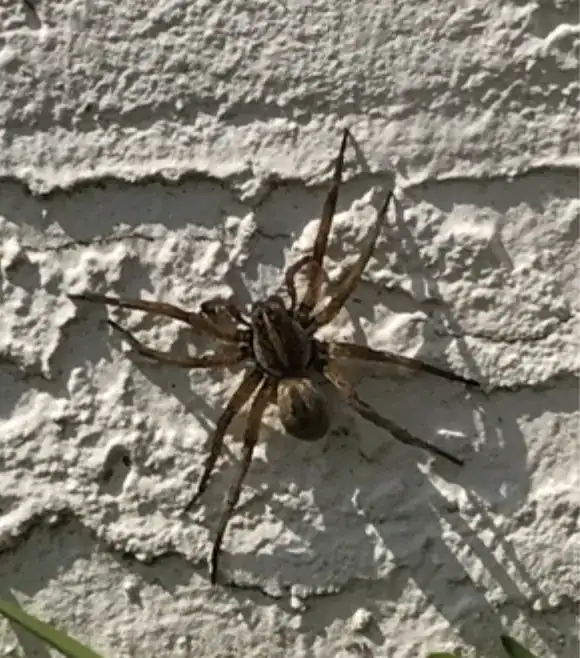
Wolf Spider
Are wolf spiders dangerous?
No. Bites are extremely rare. They can bite if threatened or trapped against your skin, but their venom is not medically significant for humans. Most bites result in minor swelling and redness similar to a bee sting. We’ve never seen a serious medical issue from a wolf spider bite in all our years of service.
Should you eliminate wolf spiders?
That depends on your tolerance. Most people find them hideous and unsettling. However, Wolf spiders are actually beneficial—they eat roaches, ants, and other pests. But if you’re finding multiple wolf spiders inside your home regularly, it usually indicates:
- Gaps or openings around doors and windows where they’re getting in
- A high population of prey insects (ants, roaches) that’s attracting them
What is the best pest control treatment to eliminate wolf spiders?
A perimeter treatment combined with proper exclusion work typically solves the problem.
Huntsman Spider in South Florida
Huntsman Spider Characteristics
Size
Huntsman spiders are among the largest spiders found in South Florida, with a leg span that can reach 3 to 5 inches across. Their body length typically measures between ¾ inch to 1 inch. Females are generally larger than males, which is common among spider species. Their legs can have a crablike appearance compared to other spiders.
Color
Huntsman spiders are typically brown to grayish-brown in color, often with a flattened body appearance. Many individuals display darker brown markings or banding on their legs. Their coloring serves as excellent camouflage against tree bark, wooden fences, and building exteriors commonly found throughout South Florida.
Eyes
Huntsman spiders have 8 eyes arranged in two rows of four, spread widely across their relatively flat head. Unlike many spiders, their eyes are not arranged in tight clusters. This wide eye arrangement gives them a broad field of vision, helping them detect movement and hunt prey effectively without relying on a web.
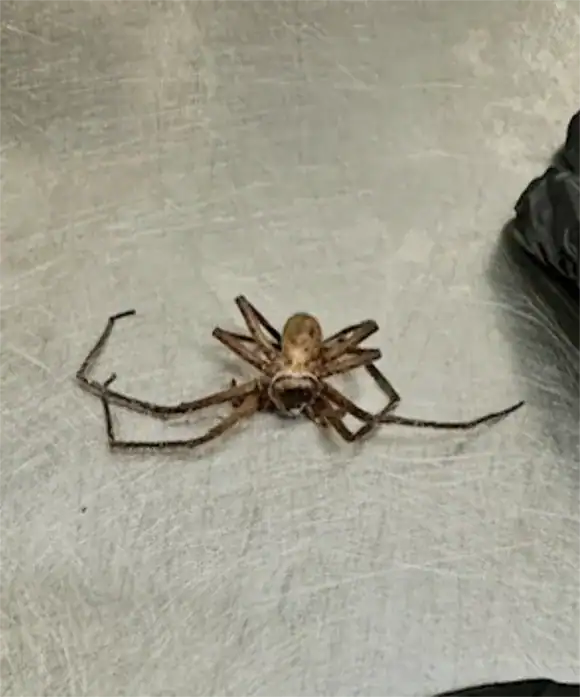
The University of Florida has lots of pictures of Huntsman spiders. This one we took ourselves in Port St Lucie.
Huntsman Spider Behavior
- Active hunters that chase down prey rather than spinning webs to catch it
- Primarily nocturnal, becoming most active at night
- Known for their incredible speed, capable of moving rapidly in any direction
- Generally non-aggressive toward humans and will typically flee rather than bite when encountered
- Will bite if threatened or cornered, though their venom is not considered medically significant to most healthy adults
- Males actively roam in search of females, which often leads them indoors
- Known to flatten their bodies to hide in tight spaces such as behind wall hangings, under furniture, and inside closets
Where can huntman spiders be found?
- Commonly found throughout South Florida, thriving in the warm, humid climate
- Prefer to live under tree bark, behind loose wood, and in rock crevices outdoors
- Frequently found on palm trees, which are abundant throughout the region
- Will readily enter homes and structures, often discovered in:
- Garages
- Bathrooms
- Kitchens
- Behind picture frames
- Inside closets
- Attracted to structures by outdoor lighting, which draws in the insects they feed on
- Prefer flat, dark, and secluded spaces where they can rest undisturbed during the day
The Spiders You Should Actually Worry About in Port St Lucie and Palm City
If Brown Recluse spiders aren’t the threat in Port St Lucie, what is?
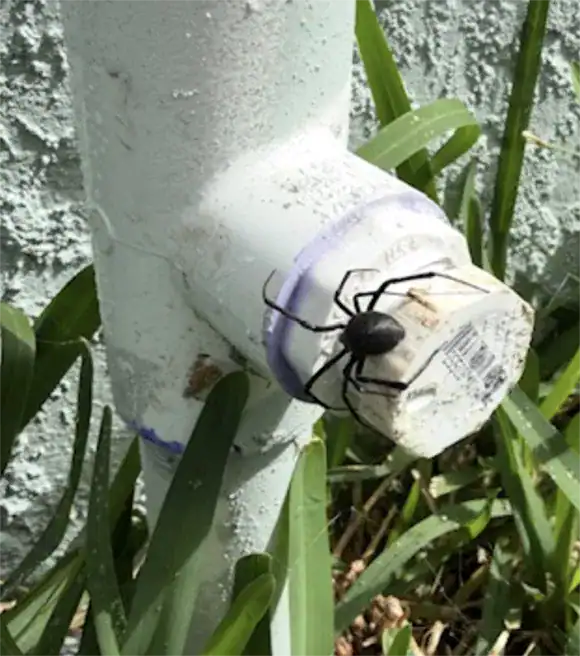
A black widow in the Riverland community of Tradition
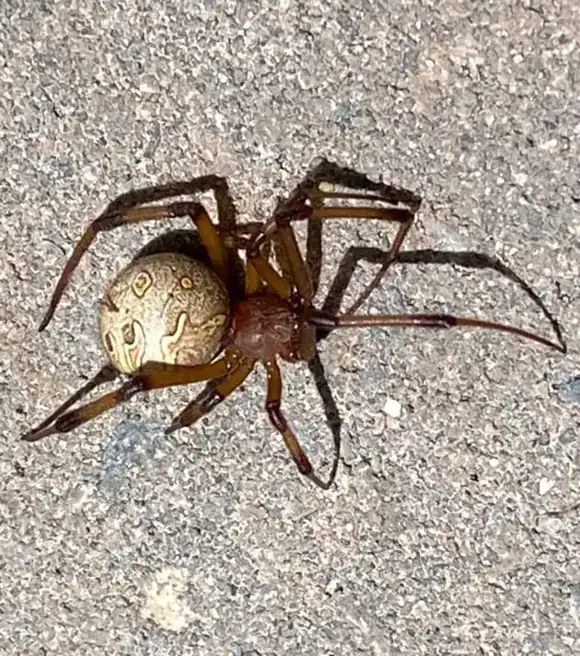
A brown widow in Tradition, Port St Lucie
Black Widow Spiders
Black Widow Spiders are the venomous spider you’re most likely to encounter in the Treasure Coast area. We see them regularly in:
- Outdoor storage sheds
- Underneath patio furniture
- Inside garage clutter (boxes, old equipment)
- Around utility meters and A/C units
- Wood piles and landscaping materials
Black Widow Identification:
- Shiny black body
- Distinctive red hourglass marking on the underside of the abdomen
- Small body (about 1/2 inch) but relatively large compared to other widow species
- Builds irregular, messy webs close to the ground
Black widow venom is neurotoxic and can cause serious symptoms—muscle pain, cramping, nausea, and difficulty breathing. While deaths are rare (most healthy adults recover fully with medical treatment), black widow bites absolutely require medical attention, especially for children, elderly individuals, or people with compromised immune systems.

Brown Widow Spiders
Brown Widow Spiders are even more common than black widows in our area. They’re found in similar locations but tend to tolerate more disturbed areas—we often find them around outdoor furniture, playground equipment, and in potted plants.
Brown Widow Identification:
- Tan to dark brown color with variable patterns
- Orange or yellow hourglass marking (not red like black widows)
- Distinctive spiky egg sacs that look like tiny sea mines
- Similar web structure to black widows
Brown widow venom is less potent than black widow venom, and they inject smaller amounts. Bites are painful but generally not as serious. Still, medical attention is recommended, particularly for vulnerable individuals.

How to Tell What Spider You Have
When you see a spider and need to identify it, focus on these key features:
Body Structure:
- Is it hairy (likely wolf spider or huntsman) or smooth and shiny (possibly widow)?
- What’s the body size relative to the legs?
Color and Markings:
- Brown recluse (if you’re even in an area where they exist) have a distinctive violin-shaped marking on the back of the cephalothorax
- Black widows have the red hourglass underneath
- Brown widows have an orange/yellow hourglass and spiky egg sacs
Web Structure:
- No web = hunting spider (wolf spider, huntsman, jumping spider)
- Messy, irregular web low to the ground = widow spider
- Organized orb web = orb weaver (not dangerous)
Location
- Ground level inside the house = probably wolf spider
- Dark corners in garage or shed = potentially widow
- High corners near ceiling = probably harmless house spider
If you’re unsure, take a photo and text it to us at 772-528-5839. We’d rather you send us twenty harmless spider photos than assume a black widow is safe.
What Attracts Spiders to Your Home?
Spiders don’t come inside looking for shelter or warmth (despite popular belief). They come inside following food. If you have spiders, you have the insects they eat.
Common spider food sources in Port St Lucie homes:
- Ants (the #1 attractant)
- Roaches
- Silverfish
- Flies and gnats
- Other small spiders
This is why effective spider control isn’t just about killing spiders—it’s about eliminating the conditions that attract them.
One more thing of note: Turn exterior lights off. While small solar powered landscape lighting is fine, large illuminating lighting such as porch lights, and flood lights will almost guarantee large nomadic spiders end up in your home. The insects that come to congregate around your exterior lighting represent and easy mean for these spiders. Invariably too, exterior lighting tends to be installed near easy entry points to home i.e. garages, front porches, and lanai’s. Leaving the outside light on for the pizza delivery man is fine, but habitually leaving them on all night will guarantee these spiders in your home. Don’t make your home a spider buffet.
Spider control approach that actually works:
- Perimeter barrier treatment to reduce insect activity around your home’s foundation
- Exclusion work to seal gaps around doors, windows, utility penetrations
- Interior spot treatment in areas where spiders are active, such as behind the water heater in the garage
- Ongoing monitoring to catch new activity before it becomes an infestation
One-time treatments rarely solve spider problems long-term. Spiders repopulate quickly, and if the food source remains, they’ll keep coming back.
Frequently Asked Questions
I found a brown spider with long legs. Is it a brown recluse?
Almost certainly not. In Port St Lucie, it’s most likely a wolf spider, huntsman spider, or southern house spider. Brown recluse spiders are extremely rare in South Florida. If you’re concerned, send us a photo for identification.
Are wolf spiders aggressive?
No. Wolf spiders are shy and prefer to run away. They’ll only bite if trapped or pressed against skin (like if one is in your shoe or bedding). Even then, the bite is minor.
How do I keep spiders out of my garage?
Reduce clutter where spiders can hide, seal gaps around the garage door, and maintain regular pest control to eliminate the insects that attract spiders. Don’t leave lights on inside or outside the garage all night. This attracts insects that the spiders feed on. Don’t make your home a spider buffet.
Should I be worried if I see a black widow in my yard?
Black widows outdoors are normal in Florida. They’re only a concern if they’re in areas where you or your family are likely to encounter them—around patio furniture, playground equipment, or entryways. We typically treat these high-traffic areas while leaving spiders in undisturbed parts of the yard (they’re beneficial for pest control).
Can you get rid of all the spiders?
Complete spider elimination isn’t realistic (or even desirable—spiders eat mosquitoes, flies, and other pests). But we can significantly reduce spider populations in and around your home and eliminate dangerous species from areas where you’re likely to encounter them. New homes in Tradition are notorious for having Brown Widow spiders in them shortly after construction. A proper pest control program can eliminate this issue quickly.
What should I do if I think I've been bitten by a black widow?
Seek medical attention immediately, especially if you experience muscle pain, cramping, or difficulty breathing. If possible, safely capture or photograph the spider for identification. Most people recover fully with medical treatment.
Don't Panic, But Don't Ignore It Either
Spider identification matters. Not because every spider is dangerous (most aren’t), but because misidentifying a harmless wolf spider as a brown recluse causes unnecessary worry—and failing to recognize a black widow as dangerous puts your family at risk.
If you’re seeing spiders regularly in your Port St Lucie home, something’s attracting them. Let’s figure out what it is and fix it before it becomes a bigger issue.
Green Pest Services has been identifying and controlling spiders on the Treasure Coast for decades. We know the difference between a wolf spider and a widow. We know where black widows hide in St. Lucie West vs. Tradition vs. Palm City (hint: it’s different). And we know how to keep them out of the areas where your family actually lives.
Text us a photo at 772-528-5839 or call for a spider inspection. We’ll identify what you have, explain whether it’s a concern, and give you a straightforward quote if treatment makes sense.
Most calls take less than five minutes. You’ll have answers before dinner.
We treat every Port St. Lucie home like our own — honest service, pet-safe methods, and next-day appointments when you need us. Our clients consistently leave great reviews on our service.
-Shane Green. CEO, Green Pest Services FL