Ants vs Termites: Expert Identification Guide
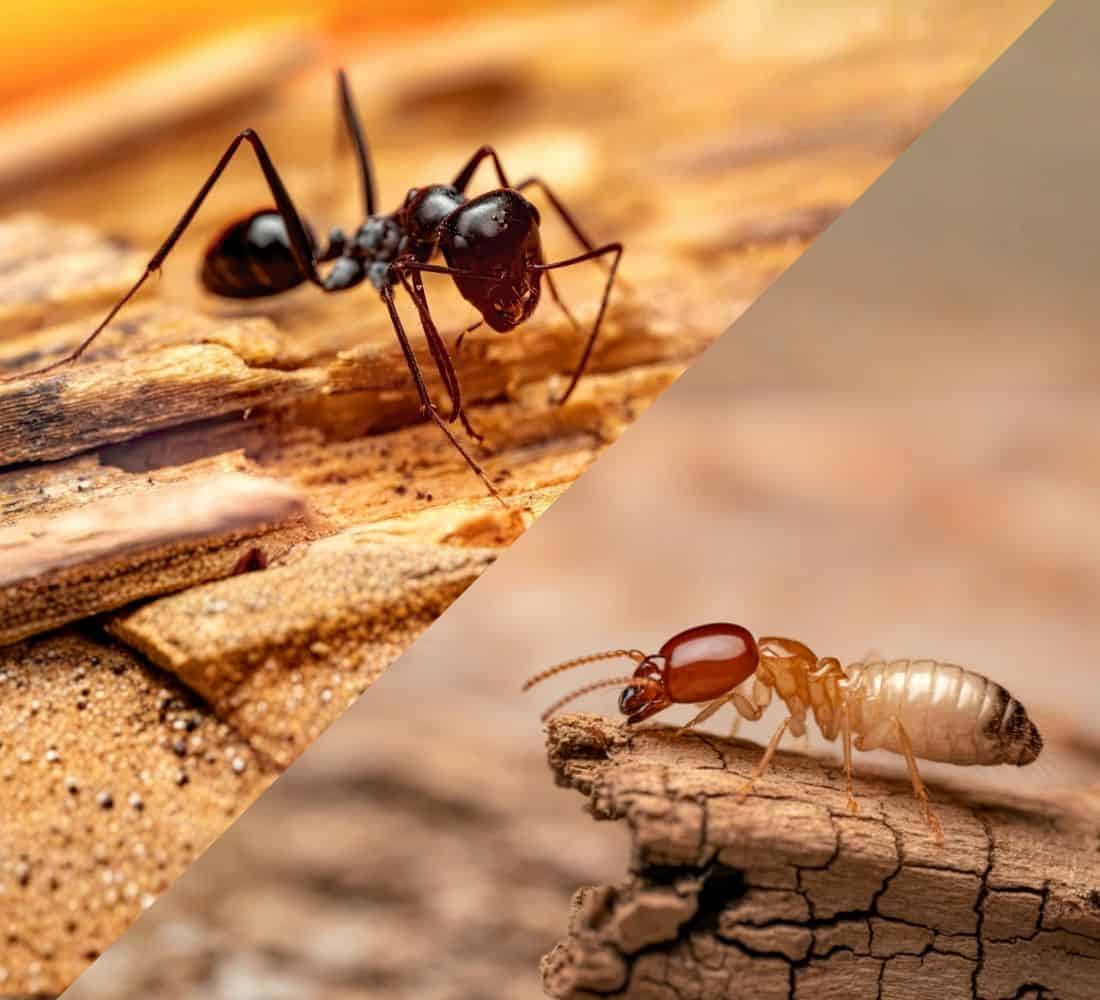
If it’s uniform pellets → likely Drywood Termites
If it’s mixed dirt sticking to walls → likely Subterranean Termites
If it’s dirt piles with small reddish-brown ants → likely Big Headed Ants
Keep reading for photos and detailed identification below.

In Port St Lucie and Palm City, Big Headed Ants cause more homeowner panic than almost any other pest. These small reddish-brown ants (Pheidole megacephala) build mud tubes just like termites and push dirt through cracks around baseboards.
We get calls every week from homeowners – especially in newer developments like those in Tradition and western Port St Lucie – concerned they have termites. Nine times out of ten? It’s Big Headed Ants.
The problem is real. Misidentification happens constantly, and unfortunately, some less reputable companies, either because of poor training or outright greed, will sell their clients expensive termite treatments for what is a relatively simple ant problem. Don’t misunderstand, termite prevention is important, but an ant problem shouldn’t scare homeowners into a more expensive service. National pest control companies quote $2,000+ for termite fumigation when an ant baiting treatment would solve the problem at a fraction of the cost. We’ve seen this scenario play out many times. Especially in Tradition, where the big national companies have their salespeople on the ground at all times.
Here’s how to tell the difference and what you can do about it.
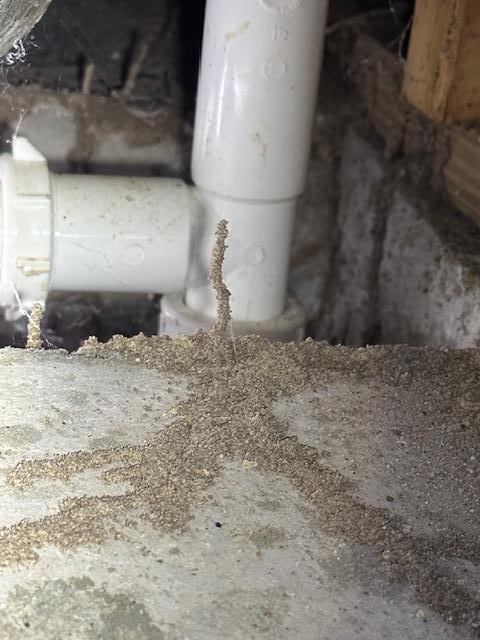
Subterranean termite mud tubes emerging from a hole in the slab for a bathtub drain. Note the tube extending several inches into the air completely unattached to anything. Subterranean termite tubes are much sturdier than big headed ants tubes.
Why Big Headed Ants Are Everywhere in Port St Lucie Right Now
Big Headed Ants thrive in disturbed soil. That’s the key.
In rapidly developing areas like Tradition, Port St. Lucie, and Palm City, new construction pushes ant colonies into nearby homes. What was once orange groves or cattle ranches is now residential neighborhoods. When bulldozers tear up the ground, Big Headed Ant colonies scatter. Your house becomes prime real estate for them to set up shop.
According to the University of Florida IFAS Extension, Big Headed Ants are an invasive species that reproduce rapidly and establish satellite colonies inside structures. They don’t need much – a crack in your foundation, a gap where plumbing enters the slab, a window frame that’s not perfectly sealed.
Once they’re in, they start excavating and pushing dirt into your walls and eventually the floors.
Step 1: Look Closely at the Material
The first question: What exactly are we looking at here?
Drywood Termite Pellets
If the material is all the exact same shape and size—uniform, hard pellets that look like tiny grains of sand or poppy seeds – with virtually no other material mixed in, you’re likely looking at termite droppings.

Mixed Dirt = Probably Ants
If there are a variety of materials present—different shapes, sizes, colors—it’s dirt and/or material from inside your walls. The presence of bits of wood is actually a great sign that its ants and not termites. There likely is wood shavings inside you walls left over from the construction process. Termites consume wood and ants do not. If there are bits of wood mixed into the material you are seeing, it’s likely from ants and not termites.
Big Headed Ants and Fire Ants both bring soil into homes when they’re trying to nest inside walls. The dirt is excavated from their tunneling and pushed out through cracks around baseboards, window frames, and door trim.
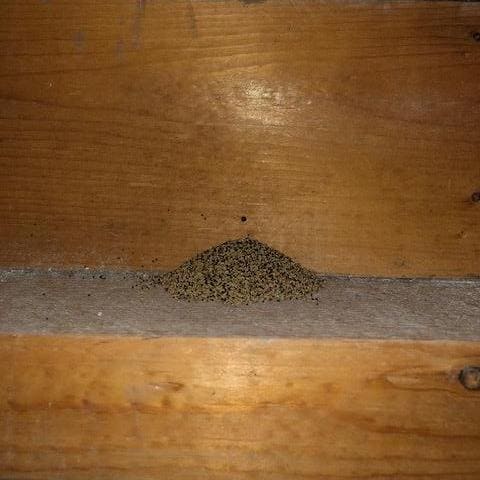
Note: Drywood termite pellets can vary greatly in color but are always the same size and shape.
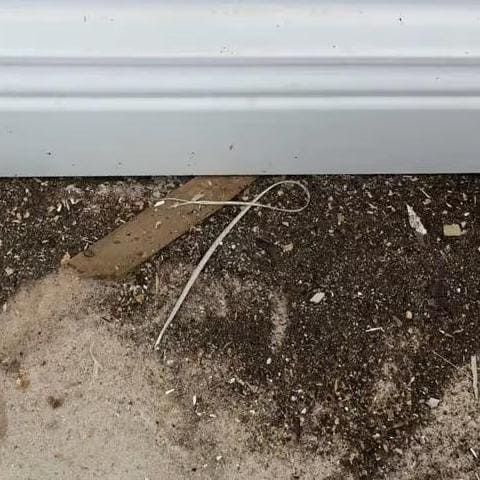
Notice the mix of various materials. This is a telltale sign of ants and not seen with termites
Step 2: Check the Location
Where exactly is it appearing?
Keep in mind that ants are likely not depositing dirt at random places in the middle of the floor or on the countertops. A situation like that is more likely to be termites as they may be in a wood beam and dropping their pellets down from the ceiling.
Dirt accumulating along baseboards, on window sills, and especially along exterior walls is more likely to be an ant issue.
Is It Sticking to the Wall?
This is the major red flag of the most destructive termites.
If the material is sticking together and adhering to the wall—instead of just falling to the floor—you’re likely dealing with Subterranean Termites.
Subterranean Termites need moisture to survive, similar to what they find underground. For this reason, they build mud tubes along the surface of the object they’re feeding on to insulate themselves from sunlight and dry air. These tubes are made of soil, termite saliva, and feces. The tubes stick together and when subs are present inside of a wall, they will occasionally make holes in the drywall that will be filled with this mud.
If this material is pushed through cracks where the window frame meets the wall, along trim boards, or around door frames, that’s a sign of Subterranean Termites. They do damage much more quickly than Drywood Termites and require immediate professional treatment.
Big Headed Ants Also Build Mud Tubes
Here’s where it gets tricky.
Big Headed Ants—particularly in South Florida—build mud tubes that look remarkably similar to termite tubes. We see this constantly in Port St Lucie. The tubes protect their trails and help maintain humidity for the colony.
The difference? Big Headed Ant tubes are usually larger, made of a mix of materials, and if you break one open, you’ll see live ants inside. Termite tubes are typically a grayish color and will not have various materials mixed in.

Step 3: Look for Live Insects
If you can see the insects themselves, identification becomes easier.
Big Headed Ants
- Size: Small, about 1/16 to 1/8 inch
- Color: Reddish-brown to light brown
- Distinctive feature: Soldier ants have disproportionately large heads (hence the name)
- Behavior: Fast-moving, active during the day, visible trails
While most termites are white, their swarmers are either brown or black.

Termites
- Size: Similar to ants, but thicker body
- Color: Cream to white (workers), dark brown to black (swarmers with wings)
- Distinctive feature: Straight antennae, broad waist (no “pinch” like ants)
- Behavior: Rarely seen unless swarming; avoid light
For a detailed visual comparison, the EPA’s termite identification guide provides excellent reference photos.
Common Ants Found Living in Port St Lucie Walls
Besides cutting a hole in your drywall, it can be difficult to know for sure if you have ants living in your walls. Here are the species we encounter most often inside homes in Port St Lucie, Tradition, and Palm City:
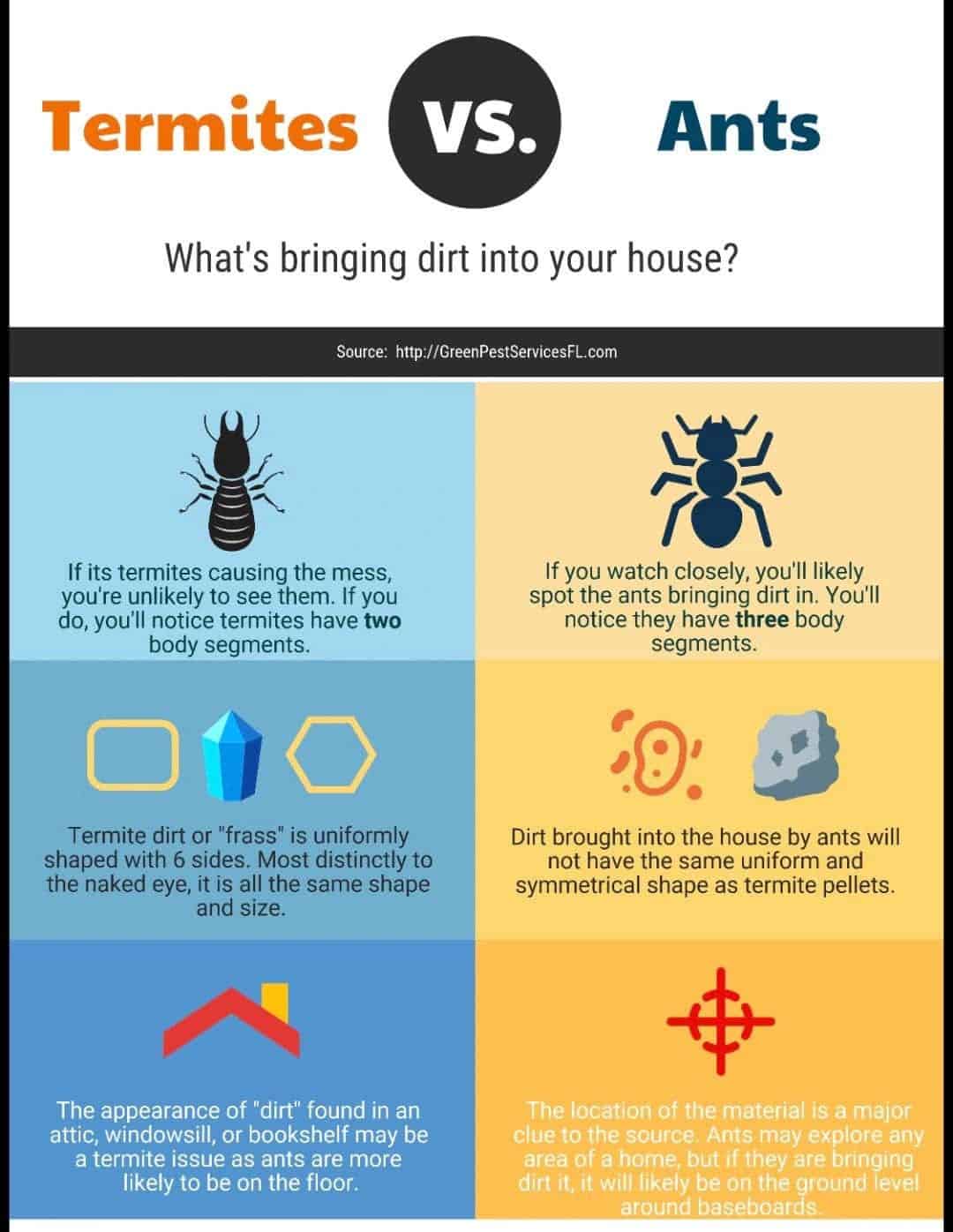
Big Headed Ants
The most common wall-nesting ant in our area
Ghost Ants (often called Sugar Ants around here)
Tiny, love kitchens and bathrooms
Carpenter Ants
Large red and black ants, typically seen around dawn and dusk, and (in South Florida) will commonly live under insulation in the attic of homes and businesses.
White Footed Ants
Form massive colonies, especially in developments with lots of flowering plants and lush foliage. Like carpenter ants, they love nesting in attics.
Pharaoh Ants
Very small, brownish, difficult to control, uncommon but absolutely need professional help as over the counter treatments actually cause the problem to worsen
Fire Ants
Less common indoors, but more common during the rainy season
Each species requires a different treatment approach. Identification matters. As you might imagine, to the untrained eye an ant looks like an ant. Sometimes even a termite looks like an ant. That is why trained professionals are important. If the company you contacted sent someone out to do an inspection, listen for specifics to see of they know what they are talking about. If they are speaking in generalities, they sent out a salesperson under the pretext of an inspection, and it might be best to call someone local.
How to Get Rid of Big Headed Ants (and Other Ants in Your Walls)
Big headed ants carrying bait back to their nest.
As a general rule, baits should be used to resolve any ant problem inside a house. Note: this doesn’t mean the bait should necessarily be applied inside. Drawing the ants out of the home is often an important aspect of the treatment.
It’s important to remember: Deploying sprays can drive ants into other parts of the home instead of eliminating them. In some species—like Pharaoh Ants—spraying causes a reaction called “budding,” where the colony splits and starts a new, separate colony elsewhere in your home, inadvertently making the problem worse.
Additionally, the actual location of a nest is usually difficult, if not impossible, to locate. Worker ants spend nearly every moment exploring and seeking out food to bring back to the nest. By using baits, the ants do the work for you. They carry the bait back to the colony, feed it to the queen and larvae, and the entire colony collapses over the course of days to a couple of weeks.
The Exception: Fire Ants
Fire Ants pose a health hazard and can react aggressively when a colony is slowly dying from bait. Also, unlike other ants, the location of a Fire Ant nest in a wall typically isn’t that hard to find. They will often build their large characteristic mounds right up against an exterior wall where it’s visible from the outside. With Fire Ants, a spray on the inside and outside is typically highly effective and fast acting.
Spray these painful pests immediately.
Carpenter Ants vs Termites: Know the Difference
Carpenter Ants are often confused with termites because both are associated with wood damage, but they’re actually quite different.
Carpenter Ants don’t actually consume wood. They excavate it to create nesting galleries – typically in already damaged wood, either from termites or moisture.. They use their large mandibles to tear through soft, damp, or previously damaged wood.
What they leave behind is called “frass”—a messy collection of wood shavings, dead insect parts, dirt, and debris. It looks very different from the uniform pile of pellets left by Drywood Termites.
Signs of Carpenter Ant Infestation:
- Piles of frass material near baseboards or window sills
- Regular sightings of Carpenter Ants, especially at dusk and dawn
- Large red and black ants—workers are 1/4 to 1/2 inch long
- Hollow-sounding wood when tapped
- Winged ants emerging in spring (swarming season), typically after a heavy rain
Carpenter Ants in South Florida typically nest in areas where there are protective voids – attics, poorly sealed windows, wood piles and downed trees.
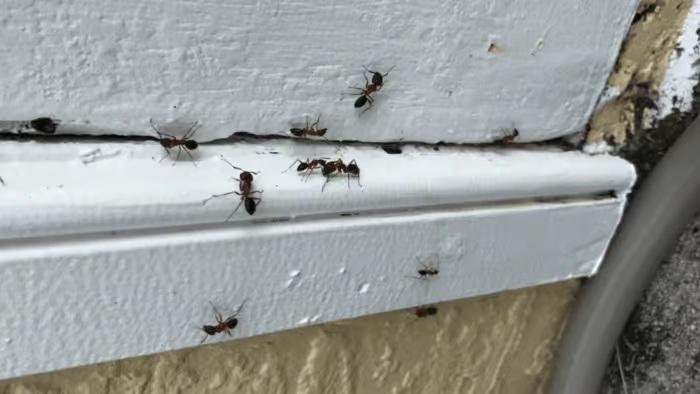
Carpenter Ants infesting water damaged wood
Other Wood-Destroying Insects in Port St Lucie
It’s not always ants or termites. Other insects can also leave sawdust-like material:
- Powderpost Beetles
- Wood Boring Beetles
- Old House Borers
- Bark Beetles
- Carpenter Bees
With most wood-boring beetles, the frass truly resembles sawdust—light, fluffy, and fine. Carpenter Ant frass is a messy mix of various materials. Termite pellets are uniform, hard, and consistent in shape.
Note: Wood destroying beetles are not a common problem in homes on the Treasure Coast. Old barn buildings and antique furniture are more likely to have these issues than, say, trusses in relatively young South Florida homes. If an inspector claims to have found powder post beetles in your home, get a second opinion before paying to have the house tented.
Cost Comparison: Big Headed Ants vs Termites
This matters, especially if you’re being quoted for termite treatment when you actually have ants.
Big Headed Ant Treatment (baiting program): Typically around $500 for a year’s worth of regular service, with follow-up visits included. Most infestations resolve within a week if treated properly.
Subterranean Termite Treatment (liquid trenching): $1,200–$2,500+ depending on home size and severity. Requires drilling, trenching around the perimeter, and treating the soil.
Drywood Termite Treatment (fumigation/tenting): $2,000–$4,000+ for a typical home. All occupants and pets must vacate for 2–4 days.
Cost of Misdiagnosis: We’ve seen homeowners spend $2,500 on termite fumigation when they had Big Headed Ants. Similarly for Powder Post Beetle treatments when the evidence was wood shaving left over from construction. In either case, thousands of dollars were wasted.
Get a second opinion if you’re unsure. A proper inspection takes 20 minutes and should be free.
Not Sure If It's Big Headed Ants or Termites?
Green Pest Services offers free inspections for homeowners in Port St Lucie, Tradition, Palm City, and Martin County.
We’ll identify the pest, explain your options, and give you a quote over the phone—no pushy sales tactics.
Same-day and next-day service available.
Preventing Ants & Termites in New Construction Homes
If you’re building or buying new construction in Tradition or western PSL, here’s what you need to know:
Big Headed Ants move into new homes during or immediately after construction. Disturbed soil, gaps in the foundation, and landscaping that’s still settling all create entry points.
Prevention tips:
Florida law requires preventative treatment for termite at the time of construction – so if your home is new, you should be covered by the company the builder used for the first year. Once that year is up, it is wise to seriously consider a termite bait system to prevent subterranean termites. Prevention is pretty cheap, whereas treating and repairing a termite issue after-the-fact is very expensive.
Termite Prevention: The Cheapest Solution
Termite remediation is often an unexpected expense that adds up fast. Subterranean Termites often attack outside load-bearing walls. Replacing destroyed beams is complicated—and expensive—if temporary supports have to be built while replacing the damaged wood.
Preventative treatments for termites will always be less expensive than waiting until you have an active infestation. Homeowners in termite-prone areas like Port St Lucie and Palm City would be wise to get quotes on preventive termite treatment.
Pre-construction termite treatments of the soil don’t typically last very long for a couple of reasons. First and foremost, construction companies hire the pest control company that will fulfill their regulatory compliance at the cheapest cost. Period. The contractor is not calling around for who will do the best job or provide the best value to the future homeowner. They find the company that will provide the necessary paperwork to get their next permit at the cheapest price and that’s it. Consequently, the company hired to perform the termite treatment use the absolute cheapest termiticides possible in order to remain competitive on price. That is a long way of saying, when the one-year guarantee is up, homeowners should seriously consider shopping around for an effective termite preventive treatment.
There is a second variety of pre-construction termite treatment. Borate based products applied to lumber before drywall is hung—are the most effective and long-lasting. These treatments are mineral-based and considered more eco-friendly than traditional termiticides. Additionally, because they are mineral based, they don’t breakdown the way chemicals do. These products also help prevent mold and mildew. If you home is not yet constructed, talk to your builder and a pest company about having this treatment done. Long-term peace of mind is priceless.
Post-construction options include liquid perimeter treatments and termite bait stations, both of which we discuss below.
Subterranean Termite Treatment Options
Once Subterranean Termites have infested a structure, the standard approach is a liquid perimeter treatment.
This involves digging a shallow trench around the perimeter of the home and applying a liquid termiticide as the trench is filled back in. Holes are then drilled every 12 inches into adjoining slabs – such as driveways and patios – to treat the underlying soil. Often termites infest homes through gaps in the slab where pipes enter, such as bathroom drains. And under kitchen sinks. In these cases, drilling through the slab in these areas may be necessary as well.
In homes where termites entered around pipes coming through the slab, holes may need to be cut into walls so the area around the pipes can be treated directly.
As you read this, if you are thinking: “Wow! That sounds expensive!” yes, you are correct on that.
Termite Bait Stations vs Liquid Treatment
Idea for prevention. Just like baits for ants, baits for termite enlist the target pest’s natural behavior to aid in prevention and control.
How bait stations work: Stations are installed around the perimeter of the home and filled with cellulose bait and your pest control company monitors them quarterly or annually. The bait used inside termite stations is typically an insect growth regulator – essentially a form of birth control. This is an ingenious method of control because it doesn’t kill the termites quickly. This means the whole colony is given time to feed freely on the bait. Having prevented the immature member of the colony growing into their next stage of life, the colony is unable to replace members of the colony as they die and the colony collapses.
Advantages:
- More eco-friendly than liquid treatments
- No drilling or trenching required
- Utilizes termites natural foraging behavior against them
For most homeowners in Port St Lucie, we recommend termite bait stations for prevention and liquid treatments if an active infestation is present.
Drywood Termite Treatment: Fumigation (Tenting)
Drywood Termites are treated using fumigation—also called tenting.
All people, pets, and food must be removed. A tent is placed over the structure, and a termiticide gas (typically sulfuryl fluoride) is injected inside. The home is sealed for 24–72 hours while the gas penetrates all wood in the structure.
This method is very effective but also quite costly ($2,000–$4,000+ for a typical home).
Important: Fumigation treatments only last as long as the tent remains on the structure. There’s no residual protection. The benefit is zero exposure to chemicals for occupants after the tent is removed. The downside? Your home is subject to reinfestation.
Some homeowners opt for spot treatments if the infestation is localized to a small area – a single truss in the attic – for example. Spot treatments are very hit-or-miss in terms of their effectiveness. For this reason, we at Green Pest Services decline to provide spot treatments for drywood termites in most cases. Tenting is the gold standard. Worth noting, we do not provide tenting treatments, so our perspective on this is not influenced by our own business interests. We are always honest with our clients and drywood termites are best treated by tenting even though that is not a service we ourselves provide.
Termite Swarmers: What to Do
Subterranean Termites emerging during a spring swarm
Every spring in South Florida — usually after the first significant rain — termites and ants swarm. If you own a pool, you’ve seen this before. The flying insect gets stuck in the water and create quite a mess every year.
Termite swarmers are winged reproductive termites looking to start new colonies. They’re attracted to light and often end up inside homes, dead on windowsills.
How to kill swarming termites: Any over-the-counter insecticide or even household cleaners will work. Honestly, most swarmers die quickly on their own without finding a suitable nesting site.
The real warning: Large numbers of swarmers inside your home — not just a few on the window — usually means there’s an active termite colony feeding inside the structure. Often, it’s the only warning you’ll get.
If you see more than a few of swarmers indoors, call for an inspection immediately.

Frequently Asked Questions
What's the difference between Big Headed Ant mud tubes and termite tubes?
Big Headed Ant tubes are less uniform in color and material. If you break one open, you’ll see brown ants inside – termites inside of a mud tube will be mostly white. Termite tubes will be nearly uniform in color. Big headed ant mud tubes will typically only be from the ground to where the stucco begins. Termites will build tubes in the same areas but their tubes are much more sturdy and will travel much farther – often straight from the ground all the way up into the attic. Big headed ant tubes won’t be that long.
How do I know if I have Big Headed Ants in my walls?
Should I spray ants I find in my home?
No, not unless they’re Fire Ants. Spraying kills the ants you see but doesn’t affect the colony—and it can drive them deeper into your walls or cause the colony to split (called “budding”). Use gel baits or granular baits instead. The ants carry the bait back to the nest, and the entire colony dies over 2–4 weeks. At GPS we are experts at solving ant infestations in Port St Lucie. If you think you need profession help, give us a call or text.
What's the best bait for Big Headed Ants?
Big Headed Ants prefer protein-based baits, but they’ll also take sugar baits depending on the colony’s nutritional needs at the time. Protein granular baits along the exterior foundation will be key for control of this type of ant. Baits work a bit more slowly but much more effectively to eliminate the entire colony, including the queen.
How much does Big Headed Ant treatment cost compared to termite treatment?
Can I treat Big Headed Ants myself, or do I need a professional?
While some small scale infestations – such as ghost ants may be controlled by DIY baits from a hardware store, Big Headed Ants are unlikely to be a good candidate for this type of treatment. BHA have what are called super-colonies. As the name suggests, these massive colonies can span huge areas. A tube of gel is unlikely to put a dent into this kind of infestation. and sometimes that works—especially for small infestations. But if ants are living inside your walls or you’re seeing mud tubes, professional treatment is worth it. We have access to commercial-grade baits that work faster and more reliably. Plus, if it turns out to be termites, you’ll catch it early before serious damage occurs.
How fast do Big Headed Ants cause damage compared to termites?
Big Headed Ants don’t cause structural damage—they’re just a nuisance. They excavate nests inside wall voids, but they’re not eating the wood. Termites, on the other hand, consume wood and can compromise structural integrity over months to years. Subterranean Termites are faster and more destructive than Drywood Termites. That’s why accurate identification matters.
How do I prevent Big Headed Ants in a new construction home in Tradition?
Have a pest control treatment done before you move in—it’s easier to treat an empty house. Seal all gaps where plumbing and electrical enter the home. Fix moisture issues immediately (leaking sprinklers, poor drainage). Consider a preventative baiting program for the first year. New construction in areas with disturbed soil (like Tradition) is especially vulnerable.
What's the difference between Big Headed Ant mud tubes and termite tubes?
Big Headed Ant tubes are less uniform in color and material. If you break one open, you’ll see brown ants inside – termites inside of a mud tube will be mostly white. Termite tubes will be nearly uniform in color. Big headed ant mud tubes will typically only be from the ground to where the stucco begins. Termites will build tubes in the same areas but their tubes are much more sturdy and will travel much farther – often straight from the ground all the way up into the attic. Big headed ant tubes won’t be that long.
How do I know if I have Big Headed Ants in my walls?
Should I spray ants I find in my home?
No, not unless they’re Fire Ants. Spraying kills the ants you see but doesn’t affect the colony—and it can drive them deeper into your walls or cause the colony to split (called “budding”). Use gel baits or granular baits instead. The ants carry the bait back to the nest, and the entire colony dies over 2–4 weeks. At GPS we are experts at solving ant infestations in Port St Lucie. If you think you need profession help, give us a call or text.
What's the best bait for Big Headed Ants?
Big Headed Ants prefer protein-based baits, but they’ll also take sugar baits depending on the colony’s nutritional needs at the time. Protein granular baits along the exterior foundation will be key for control of this type of ant. Baits work a bit more slowly but much more effectively to eliminate the entire colony, including the queen.
How much does Big Headed Ant treatment cost compared to termite treatment?
Can I treat Big Headed Ants myself, or do I need a professional?
While some small scale infestations – such as ghost ants may be controlled by DIY baits from a hardware store, Big Headed Ants are unlikely to be a good candidate for this type of treatment. BHA have what are called super-colonies. As the name suggests, these massive colonies can span huge areas. A tube of gel is unlikely to put a dent into this kind of infestation. and sometimes that works—especially for small infestations. But if ants are living inside your walls or you’re seeing mud tubes, professional treatment is worth it. We have access to commercial-grade baits that work faster and more reliably. Plus, if it turns out to be termites, you’ll catch it early before serious damage occurs.
How fast do Big Headed Ants cause damage compared to termites?
Big Headed Ants don’t cause structural damage—they’re just a nuisance. They excavate nests inside wall voids, but they’re not eating the wood. Termites, on the other hand, consume wood and can compromise structural integrity over months to years. Subterranean Termites are faster and more destructive than Drywood Termites. That’s why accurate identification matters.
How do I prevent Big Headed Ants in a new construction home in Tradition?
Have a pest control treatment done before you move in—it’s easier to treat an empty house. Seal all gaps where plumbing and electrical enter the home. Fix moisture issues immediately (leaking sprinklers, poor drainage). Consider a preventative baiting program for the first year. New construction in areas with disturbed soil (like Tradition) is especially vulnerable.
Why Green Pest Services for Big Headed Ants and Termites?
We’re based in Tradition, on Tom Mackie Boulevard. We’ve been serving Port St Lucie, Palm City, and Martin County for years. We know the pests in this area – not just from textbooks, but from seeing them every single day in homes just like yours.
When a homeowner in a new development calls about dirt piles near their baseboards, we know what we’re looking at before we even arrive. Big Headed Ants. Every time.
We don’t sell you services you don’t need. If it’s ants, we’ll treat for ants. If it’s termites, we’ll treat for termites. And we’ll explain the difference so you understand exactly what’s happening in your home.
What we offer:
- Free inspections for Port St Lucie and Martin County homeowners
- Accurate identification—ants vs termites vs beetles
- Quotes over the phone, no pushy sales visits
- Same-day or next-day service available
- Satisfaction guarantee on all treatments
- Licensed, insured, and experienced
We promise: if you call us about termites and it turns out to be Big Headed Ants, we’ll tell you. And we’ll provide you the right treatment – not just the most expensive one. treatment.
Get a Free Inspection Today
Dirt piles? Mud tubes? Not sure what you’re dealing with?
Call Green Pest Services at 772-528-5839
Serving Port St Lucie, Tradition, Palm City, and all of Martin County.
Two locations: Tradition (Tom Mackie Blvd) and Palm City (Martin Downs Blvd).
We treat every Port St. Lucie home like our own — honest service, pet-safe methods, and next-day appointments when you need us. Our clients consistently leave great reviews on our service.
-Shane Green. CEO, Green Pest Services FL