Florida Ant Identification Guide
Pest Control Exterminators in Port St Lucie
Florida is home to more than 200 ant species, but only a handful are common pests: Ghost Ants or Sugar Ants (Tapinoma melanocephalum), Big-Headed Ants (Pheidole megacephala), Red Imported Fire Ants (Solenopsis invicta), Florida Carpenter Ants (Camponotus floridanus), White-Footed Ants (Technomyrmex difficilis), Pharaoh Ants (Monomorium pharaonis), Acrobat Ants (Crematogaster ashmeadi), and Twig Ants (Pseudomyrmex gracilis, also called Oak Ants or Tree Ants). Of these, only Fire Ants and Twig Ants regularly sting humans. While Carpenter Ants can’t sting, they can deliver a painful bite when threatened. The Red Velvet Ant or “Cow Killer” (Dasymutilla occidentalis) is often mistaken for an ant but is actually a wingless wasp. It possesses one of the most painful stings in Florida — thankfully they are not very common, particularly in suburban environments. Instead, Velvet Ants are typically found in rural areas. Correct identification is essential — Fire Ant baits will not work on Ghost Ants, and Ghost Ant treatments will not work on Fire Ants or Big-Headed Ants. The most common indoor pest ant on the Treasure Coast (Port St Lucie, Stuart, Palm City) is Ghost Ants — those pesky tiny ants you’ve seen on your kitchen and bathroom counters. After Ghost Ants, Fire Ants (that sting) and Big-Headed Ants (that bring dirt and debris in around baseboards) are the other common pest ants we see in Port St Lucie.
The most common ants in Florida requiring Pest Control Services
* Denotes the ability to sting
- Big Headed Ants
- Carpenter Ants
- Fire Ants*
- Ghost Ants/Sugar Ants
- Pharaoh Ants
- Twig Ants*
- White Footed Ants
- Velvet Ants/Cow Killer Ants*
Below is a guide to the various species of ants in Florida, how you can identify them, whether or not they bite, and information on controlling them naturally or organically.
What are ants?
Ants have been present in the fossil record going back 180 million years. Present on every continent but Antarctica, ants thrive anywhere humans do. Hot, humid climates, such as South Florida, are an especially advantageous environment. Ants are closely related to bees and wasps. Like bees and wasps, they are social creatures operating in highly organized and complex colonies. Another similarity with their flying cousins is most (71%) ants have the ability to sting. Some scientists believe that something about the presence of a stinger either led to or contributed to the formation of the highly complex societies found within the Hymenoptera family of insects. (Blaimer, 2023)
Contrary to popular belief, ants and termites are not closely related. Termites are actually more evolutionarily close to cockroaches. The similarity in appearance and behavior of ants and termites is an example of convergent evolution — that is, when two species evolve similar physical or behavioral traits because of similar evolutionary pressures or advantages, despite not being closely related.
Are ants dangerous?
While most species are harmless or not commonly encountered around homes, others certainly can be. Some may not pose much risk to human health but are a threat to property. Finally, some ants may constitute no danger in and of themselves but can inadvertently spread disease.
Big-Headed Ants (Pheidole megacephala)
Big-Headed Ants were not a significant household pest on the Treasure Coast until around the turn of the century. In the early 2000s we started to see them commonly in the Jensen Beach area. Today they are common from Hutchinson Island to Tradition. They seem to be less common in more rural areas such as Palm City farms where they struggle to compete with Fire Ants. In more suburban environments, though, Big-Headed Ants seem to have the upper hand. Today Big-Headed Ants are the second most common ant problem requiring pest control in all of St Lucie and Martin County, second only to Sugar Ant infestations.
A common sign of a Big-Headed Ant infestation is dirt and debris accumulating around the baseboards. This often leads homeowners to worry they have termites. Thankfully, Big-Headed Ants don’t damage wood. They do, however, make quite a mess. In cases of heavy infestation, Big-Headed Ants actually cause spider infestations as well. The unending supply of ants as food for the spiders led to a major explosion of the spider population inside the home, where live food for spiders is typically scarce.
Unlike some other pests, Big-Headed Ants can be extremely difficult to control for homeowners. Their colonies are so large and interconnected that stopping an invasion using over-the-counter products is unlikely. Where pest control issues with fire ants or ghost ants may be controlled by a highly-determined homeowner, when it comes to Big-Headed Ants, a professional pest control company should be relied upon.

Can Big Headed Ants be Controlled Naturally or Organically?
Oftentimes, yes. Though organic and natural insecticides have their limits, there are pests and situations where these products can be effects. Mineral-based baits can provide control of Big Headed Ants if the right products are employed. BHA is a protein or grease ant that prefer to feed on protein-rich foods. Common ant baits products that are liquid or gel are often sugar based and unlikely to be effective on this species of ant. Another factor necessary for success in dealing with Big Headed Ants is to bear in mind a large number of individuals present. A small amount of bait is likely to kill only a small number of ants.
Green Pest Services has years of experience in providing affordable pest control services in Stuart and Port St Lucie. We specialize in resolving pests problems in the least toxic and most environmentally friendly way wherever possible. We are experts at ant control and top-rated on consumer review sites.
Florida Carpenter Ant (Camponotus floridanus)
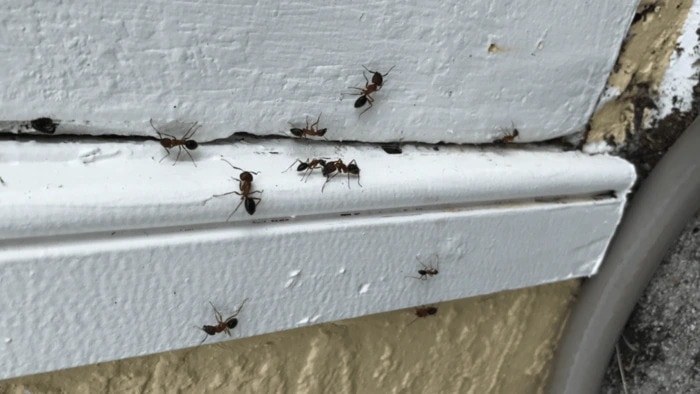
The Florida Carpenter Ant is widespread in the State of Florida and by far the most common species of Carpenter Ant found in Port St Lucie and Stuart. There are several other species of Carpenter Ant present in the State, including the Tortugas Carpenter Ant, the Compact Carpenter Ant, and the Black Carpenter Ant.
Contrary to popular belief, Carpenter Ants do not consume wood the way termites do. Some species may cause damage to soft or rotten wood in the process of building a nest, but the Florida Carpenter Ant is less prone to this behavior than some northern and western species.
Carpenter Ants possess large and powerful mandibles that can cause an extremely painful bite. They may also inject the bite with formic acid. While not venomous in the same vein as a Fire Ant, Carpenter Ant bites are still a painful threat to people. Thankfully for Floridians, these sorts of bites are uncommon.
Can Carpenter Ants Be Controlled Naturally or Organically?
Absolutely. The single most effective non-chemical step is locating and removing the actual nest — Florida Carpenter Ants nest in moist or rotten wood, attic insulation, and sometimes inside abandoned termite galleries. Repairing water-damaged wood, fixing leaks, and reducing humidity in attics and crawl spaces removes their preferred habitat.
Among organic and reduced-toxicity products, boric acid baits are the most reliable option. Boric acid is a mineral pesticide recognized as low-toxicity and is the active ingredient in many over-the-counter ant baits. Carpenter Ants are protein-and-sugar feeders, so both sugar-based and protein-based boric acid baits can work.
Surface sprays from the hardware store typically only kill the few foragers you can see. The queen and the broader colony remain untouched. For persistent infestations, professional treatment combines bait placement, residual treatment of entry points, and identification of the nest itself — a combination that’s much more effective than DIY contact sprays.
Red Imported Fire Ant (Solenopsis invicta)
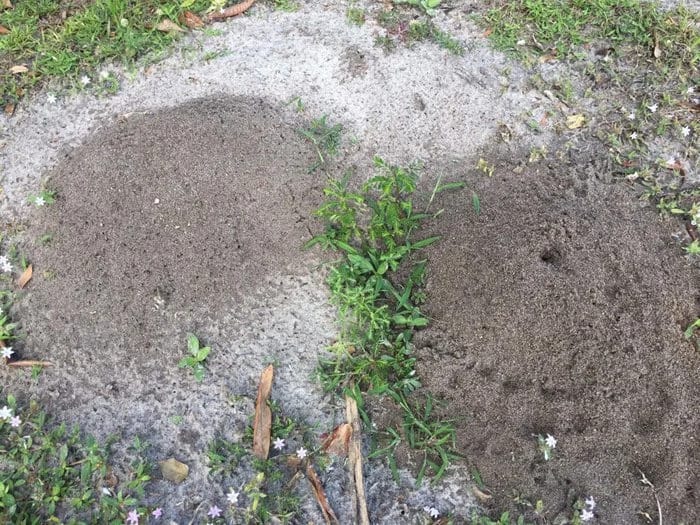
Fire ants are a common and painful pest in Port St Lucie and Palm City. If you have spent any amount of time in South Florida you have likely fallen victim to these invasive ants at some point. People often refer to a Fire Ant “bite.” While it is true that these ants will bite, it is their sting that makes them truly painful. It also makes them dangerous. Allergic reactions to Fire Ant bites are common, sometimes requiring the use of an epi-pen. Fire Ant behavior exacerbates this threat. The first ant on a person typically does not sting. Instead, they wait until there are many others, sometimes dozens of ants ready to attack, and then coordinate their stinging all at once. This mass and sudden influx of venom can cause major adverse reactions in sensitive individuals.
In 1989 a physician questionnaire survey was conducted by the Fire Ant Subcommittee of the American Academy of Allergy and Immunology to document deaths caused by imported fire ant stings. From the 29,300 physicians surveyed, reports of 83 fatal and two near-fatal fire ant-sting reactions were received. Most anaphylactic deaths were reported from Florida (22) and Texas (19). After excluding duplicate re
Can Fire Ants Be Controlled Naturally or Organically?
Lasting control is likely to be difficult. A boric acid based granular bait is likely to be helpful at reducing their numbers, but unlikely to completely eliminate the colony. Regular – talking weekly – applications will be more effective, but this is often unrealistic and expensive for most people.
Another option would be the use of an IGR bait. IGR stands to Insect Growth Regulator. While this isn’t an organic treatment per se, it is very low toxicity. In fact, IGR’s aren’t even toxic to ants. Instead, they mimic certain hormones of insect to disrupt their reproduction. With the colony no longer producing new members, over time the colony collapses.
Essential oils are another option. The specific oil used is less important, there are many options on that front. What is important to keep in mind is that these treatments are unlikely to be very effective against Fire Ants, and certainly not for any meaningful length of time. They will kill some ants, and sometimes that can be satisfying when talking about aggressive stinging ants like fire ants, but once the smell of the essential oils has dissipated, so has their repellency and effectiveness.
Honest truth: Fire Ants are among the hardest Florida ants to fully eliminate using only organic methods. For families with pets, livestock, or children at higher risk of severe stings, a perimeter residual treatment from a professional pest control company is often a worthwhile add-on.
Ghost Ants aka Sugar Ants (Tapinoma melanocephalum)
By far the most common indoor pest in Port St Lucie and Martin County. The Ghost Ant, often colloquially referred to as the Sugar Ant, is a small fast-moving ant. Its behavior can sometimes be interpreted as erratic, though generally when this behavior is observed it is in fact merely systematically scouring the area for any available food sources. Because of their partially translucent appearance, they are sometimes mistaken for tiny spiders.
Ghost Ants have a strong preference for sugar and carbohydrate-based foods, though they will infest protein-based products as well such as pet food. This is especially true of wet pet food because they have a constant need for water. For this reason, it’s common to find Ghost Ants in bathrooms despite the absence of food. Often homeowners will try to solve a Ghost Ant infestation themselves using gel-based baits, Terro Bait being the most common. While these products can be helpful, baiting for Ghost Ants inside of a home is not always the best strategy to eliminate them. Unlike Pharaoh Ants, Ghost Ants most often are entering the home from the outside, foraging for food and water and then returning to the colony that is based outdoors. Ghost Ants prefer the warmer and more humid environment on the exterior of Florida homes. For this reason, baiting for Ghost Ants outside of the home is often a more effective strategy and has the added benefit of drawing the ants out of the interior of the structure. The exception to this rule of thumb is the brief Florida winter. For the few months out of the year where temperatures inside homes are actually warmer than those outside the home, Ghost Ants will sometimes move into structures. In this scenario baiting inside is necessary.
Ghost Ants pose no significant risk to human health, though they do impose economic costs. For restaurants they can ruin food and reputations. For homeowners they do much the same.

Can Ghost Ants Be Controlled Naturally or Organically?
Yes — Ghost Ants are one of the most controllable ants on this list using natural and organic methods. Because they prefer sugar and carbohydrate-based foods, sweet boric acid gel baits work exceptionally well. Boric acid is a mineral pesticide recognized as low-toxicity and is the active ingredient in many over-the-counter ant baits, including Terro and similar products.
The most important strategic point with Ghost Ants is where you bait. Inside-the-home baiting often falls short because Ghost Ants are typically foraging into the home from an outdoor colony — they enter, find food and water, and return to the nest outside. Baiting the exterior perimeter of the home, especially around foundation edges, doorways, and irrigation lines, often works better than baiting inside. The exception is during Florida’s brief winter, when interior temperatures may exceed exterior temperatures and Ghost Ants move indoors — in that case, indoor baiting becomes necessary.
For sensitive areas like kitchens and pet food storage zones, small gel bait placements are usually preferable to sprays. Diatomaceous earth applied along baseboards and entry points provides additional reduced-toxicity control. Essential-oil sprays (peppermint, citrus) can repel Ghost Ants from specific surfaces but don’t eliminate the colony — they’re best used as a complement to baiting, not a replacement.
Pharaoh Ants (Monomorium pharaonis)
The Pharaoh Ant is a very small species of ant only slightly larger in size than the more common Ghost Ant. They can be distinguished from Ghost Ants in that the Pharaoh Ant is a darker color and moves much more slowly and deliberately than the fast and erratic Ghost Ant. While Ghost Ants run around very quickly and sometimes erratically, Pharaoh Ants move very slowly and deliberately.
The Pharaoh Ant was once a widespread and a fairly difficult pest to control on the Treasure Coast, but as better baits and knowledge became available, the Pharaoh Ant became much less common. In recent years there has been a major resurgence of this pest in homes and structures in our area, however.
The Pharaoh Ant is considered the most difficult ant species to control inside of a structure. They eagerly adapt to living totally within buildings and are more prone to budding than most other species of ant. Budding is the process of ant colonies creating new queens so that there are multiple, interconnected colonies within a structure. This decentralized structure can make gaining control of a Pharaoh Ant infestation difficult. If treated incorrectly, a homeowner or inexperienced pest control technician can inadvertently make the problem worse. Trying to spray away Pharaoh Ants will typically induce budding and lead to a more entrenched infestation than if the individual had simply done nothing.
Pharaoh Ants are a significant pest because they pose a threat to human health. Pharaoh Ants can spread up to a dozen human pathogens. Burn victims and babies have become infected by diseases such as Staph by contact with Pharaoh Ants infesting the hospital.

Can Pharaoh Ants Be Controlled Naturally or Organically?
Yes, but very carefully — Pharaoh Ants are unique in that the wrong organic or DIY approach can make the problem dramatically worse. Boric acid baits in granular or gel form are the only natural-method approach that reliably works. Workers carry the bait back to the colony, killing the queen over several weeks.
What NOT to use on Pharaoh Ants: liquid sprays of any kind, including essential-oil sprays. Spraying Pharaoh Ant trails triggers a defensive behavior called “budding,” where the colony splits into multiple smaller colonies that spread further through the structure. A small Pharaoh Ant problem can become a serious infestation in days if treated with sprays. Diatomaceous earth and mineral dusts also tend to underperform with Pharaoh Ants compared to other species.
Pharaoh Ants are considered the most difficult ant species to control inside a structure, and their resurgence in Port St Lucie and Stuart in recent years has caught many homeowners off guard. If you suspect Pharaoh Ants and the infestation extends beyond a single trail, a highly rated pest control company is the safer path — these are not pests where DIY trial-and-error is recommended.
Twig Ant (Pseudomyrmex gracilis) — also called Oak Ant or Tree Ant
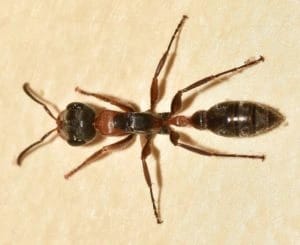
Twig Ants are also commonly called Oak Ants or Tree Ants because they live in trees and shrubs, not on the ground. The Twig Ant is an extremely common ant with a fairly painful sting, though it is not a particularly common pest problem. Now this may sound counterintuitive, but because it is extremely rare for Twig Ants to enter a home, and because their nests are not typically found on the ground, they are often present but don’t have any interaction with people. They are also not particularly aggressive by nature. All that said, it is common for people to be stung by Twig Ants when trimming hedges and trees where these ants forage and live.
There is a common misperception that Twig Ants are solitary ants. This probably arises because Twig Ants don’t typically form trails the way other ants do and are usually not present in great numbers. Nevertheless, Twig Ants, like all other ants, do live in colonies and depend on each other for survival.
Control is typically straightforward if using equipment capable of making applications to trees and foliage.
Can Twig Ants Be Controlled Naturally or Organically?
Yes — Twig Ants are one of the easier ants on this list to control using natural and organic products. Because their nests are in trees, shrubs, and hedges rather than in walls or underground, treatment is largely about treating foliage rather than chasing colonies indoors. Sugary baits containing boric acid (a mineral-based stomach poison) work on Twig Ants, as do natural oil insecticides — citrus oil, peppermint oil, and similar essential-oil products — which kill on contact and also repel.
The single most useful preventive step is to treat trees and shrubs with a natural oil insecticide a day or two before doing any major trimming or hedge work. Twig Ants foraging on the foliage will be killed or repelled, dramatically reducing the chance of being stung while you work. Long sleeves, gloves, and awareness of where you’re reaching also help — most Twig Ant stings happen when someone unknowingly grabs a branch holding a few foraging ants.
For people highly sensitive or allergic to insect stings, professional treatment of the property’s larger trees and shrubs is a reasonable add-on, especially during summer months when Twig Ants are most active.
White-Footed Ants (Technomyrmex difficilis)
Like many of the other ants described here, White-Footed Ants are not native to Florida and weren’t present as recently as the 1980s. According to the University of Florida Entomology department, White-Footed Ants were first identified in Florida in 1986, and by the mid-2000s had established themselves in St. Lucie and Martin County.
White-Footed Ants are a sweet-eating ant, similar to Ghost Ants. They thrive in thick vegetation and on flowering plants. These jet-black ants are common in gated communities where lush landscaping is required and maintained. Tradition (34987) is loaded with White-Footed Ants. They often come in on plants from nurseries for newly constructed homes — moving in before even the new homeowners do.
Pest Control companies had a notoriously difficult time controlling these ants when they first arrived on the Treasure Coast. Since then, knowledge and products have improved so that quality exterminators should be able to make quick work of these annoying invaders.
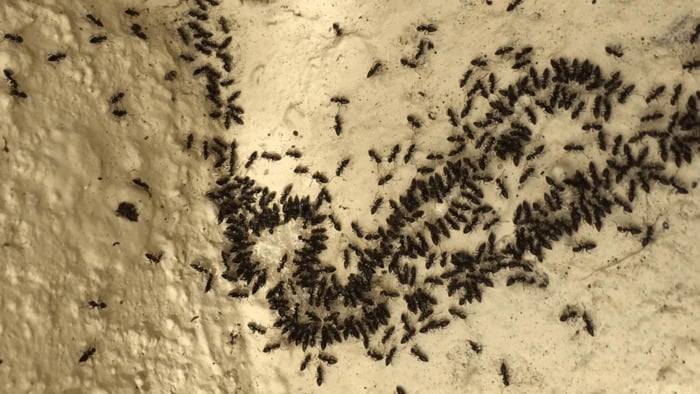
Can White-Footed Ants Be Controlled Naturally or Organically?
Yes, with patience. White-Footed Ants are sweet-feeders like Ghost Ants, so boric acid gel baits placed where the ants trail are an effective natural-method approach. The catch is that White-Footed Ant colonies are very large and interconnected — control can take weeks because the bait needs to circulate through the entire colony network.
The most effective natural-method strategy combines bait placement with reducing the conditions that attract them. White-Footed Ants thrive on flowering plants and lush, well-irrigated landscaping. Trimming back vegetation that touches the home, fixing irrigation overspray that keeps planting beds wet, and clearing dead insects from eaves and soffits all reduce the food and habitat the colony relies on. Essential-oil sprays can repel them from specific entry points but won’t eliminate the colony.
Because White-Footed Ants often arrive on plants brought in from nurseries (especially in newer-construction neighborhoods like Tradition), a quick inspection of new landscaping plants before installation is one of the simplest long-term preventive steps a homeowner can take.
Acrobat Ants (Crematogaster ashmeadi)
Acrobat Ants are similar to White-Footed Ants and Twig Ants in that they are an arboreal species, meaning they live in trees. This also means they will live in the attics of homes and sometimes infest wall voids.
Though Acrobat Ants are relatively common in Florida they have not been a major pest on the Treasure Coast, though anecdotally that seems to be changing. Here at Green Pest Services, we would typically encounter Acrobat Ants around homes located along the St. Lucie River and on the C-24 canal in the Southbend area of Port St Lucie. In 2022, we began to get calls for Acrobat Ants in the Oak Hammock neighborhood and Vitalia community of Tradition.
Treatment for this species of ant is similar to that of White-Footed Ants and Sugar Ants, and should not present a major challenge to a professional pest control company.

Can Acrobat Ants Be Controlled Naturally or Organically?
Yes — Acrobat Ants respond well to the same natural-method approaches that work on Ghost Ants and White-Footed Ants. Boric acid gel baits and granular baits, particularly those that combine sweet and protein attractants (Acrobat Ants will eat both), reach the colony when foraging workers carry them back to the nest. Treatment can take 2-3 weeks for full effect because Acrobat Ant colonies tend to be moderately sized but well-distributed across multiple nest sites in trees, attic insulation, or wall voids.
The most useful preventive step is identifying and treating the nest itself. Acrobat Ants are arboreal — their primary nests are typically in dead branches, hollow trees, or tree cavities on the property, with satellite nests in attic insulation, wall voids, or under siding. Trimming back tree branches that touch the home, sealing gaps where utility lines enter, and inspecting attic insulation for ant activity all help. Diatomaceous earth applied into wall voids provides additional low-toxicity control where ants are tracking through.
For larger infestations or when the nest is inside the home’s structure, professional treatment is often more efficient than DIY because reaching the nest with the right product matters more than the toxicity of the product itself.
The Red Velvet Ant (Dasymutilla occidentalis)
What is often considered the most painful ant in our area, the Velvet Ant aka “Cow Killer,” is in fact not an ant at all but a wasp. The males have wings but the females do not, thus leading to the misnomer that these insects are ants. Another difference between males and females of this species of wasp, perhaps the most important difference for a resident of the Treasure Coast, is that the females possess a painful sting. This sting is so painful it has earned the Red Velvet Ant the nickname the Cow Killer Ant.
Native to Florida, the Eastern Velvet Ant is a dramatically colored parasitic wasp. Varying in color from red to orange with brightly contrasting black, they are sometimes mistaken for another large red and black ant — the Carpenter Ant. Velvet Ants are often larger and have a fuzzy/hair body compared to the Carpenter Ant. Because females lack the ability to escape quickly, they instead come armed with an extremely painful sting. Like most wasps, Dasymutilla occidentalis feeds on nectar. They are considered parasitic because females will deposit their eggs onto the larvae of other wasp species, enabling their young to feed on the unlucky host. These “ants” are a ground-dwelling pest. Cow Killer Ants prefer a dry habitat consisting of well-drained soils.
The Red Velvet Ant is a level 3 out of 4 on both the Schmidt and Starr Pain Scale. For reference, a Fire Ant is a 1 on the Starr Scale.
Can the Red Velvet Ant Be Controlled Naturally or Organically?
Yes, and natural methods are particularly well-suited to Red Velvet Ant prevention. Botanical oil-based insecticides — citrus oil, peppermint oil, cedar oil, and similar essential-oil products — excel at repelling wasps and ants even more than at killing them, which is exactly what you want for a solitary ground-dwelling wasp like Dasymutilla occidentalis. Treating the perimeter of your yard, sandy or dry soil areas, and any locations where you’ve spotted Velvet Ants creates a repellent zone that keeps them off the property.
Because Red Velvet Ants are parasitic on the larvae of ground-nesting host wasps (bumblebees and other solitary wasps), reducing the host wasp population on your property indirectly reduces the Velvet Ant population over time. Repelling both the host and the parasite with natural oils is a long-term strategy.
For families with children or pets in yards where Velvet Ants have been spotted, a professional pest control service can apply a more durable perimeter treatment that prevents these wasps from establishing a presence — particularly important during summer months when activity peaks.
Frequently Asked Questions
What ants in Florida bite or sting?
The Florida ants that regularly sting humans are Red Imported Fire Ants (Solenopsis invicta) and Twig Ants (Pseudomyrmex gracilis). Acrobat Ants (Crematogaster ashmeadi) possess the ability to sting but they do so rarely and the effect is very mild. Florida Carpenter Ants (Camponotus floridanus) can deliver a painful bite and may even inject formic acid, but they lack the ability to sting. The other common Florida household ants — Ghost Ants, Big-Headed Ants, White-Footed Ants, and Pharaoh Ants — do not bite or sting humans. The Red Velvet Ant or “Cow Killer” (Dasymutilla occidentalis) is less common around homes than open fields and is actually not an ant, but a wingless wasp; it has a powerful sting that is rated level 3 out of 4 on both the Schmidt and Starr Pain Scales — among the most painful stings in Florida.
What types of ants are common in Florida?
Florida has more than 200 ant species, but the most common household and yard pests are Ghost Ants (also called Sugar Ants), Big-Headed Ants, Red Imported Fire Ants, Florida Carpenter Ants, White-Footed Ants, Pharaoh Ants, Acrobat Ants, and Twig Ants (also called Oak Ants or Tree Ants). Each species has different behavior, habitat, and treatment requirements. Identifying which species you’re dealing with is the first and most important step toward control. Treatments effective on one species often fail on another, or may even make the problem worse.
What are the red and black ants in Florida?
The most likely identification is the Red Imported Fire Ant (Solenopsis invicta), which ranges in color from red to reddish-brown to almost black and builds distinctive sandy mounds in lawns. Twig Ants (Pseudomyrmex gracilis) are also orange and black but slender, found in trees and shrubs and never in great numbers. The Red Velvet Ant or Cow Killer (Dasymutilla occidentalis) is actually a wasp, not an ant — large, fuzzy, dramatic red-and-orange-and-black coloring, with one of the most painful stings in Florida. Florida Carpenter Ants (Camponotus floridanus) can also appear bicolored red and black, but are noticeably larger than Fire Ants, don’t build sandy mounds, and are by far most active in the morning and evening.
What are the small black ants in my Florida kitchen?
Almost certainly Ghost Ants, also called Sugar Ants (Tapinoma melanocephalum) — tiny, fast-moving, with dark heads and pale or translucent bodies. Their appearance can vary greatly based on the background surface they are seen on. They are the most common indoor ant pest in Port St Lucie and Martin County, and they often appear suddenly around water sources in kitchens and bathrooms. White-Footed Ants (Technomyrmex difficilis) are also small and decidedly black. They are most commonly seen outdoors on flowering plants and along exterior walls — often heading straight for the attic. Pharaoh Ants (Monomorium pharaonis) are another possibility but are slightly larger, slower-moving, and darker than Ghost Ants — more brown than black.
What are oak ants or tree ants in Florida?
“Oak ant” and “tree ant” are colloquial names for the Twig Ant (Pseudomyrmex gracilis), a slender red-and-black ant that lives in trees, shrubs, and hedges rather than on the ground. They have a painful sting and are most often encountered when trimming foliage. They rarely enter homes and are usually seen as single individuals rather than in trails or swarms.
How do I tell Fire Ants from Big-Headed Ants?
Both species are reddish-brown and live in lawns, so they’re commonly confused. Three key differences: First, Fire Ants build distinctive sandy mounds, especially after rain, while Big-Headed Ants don’t build noticeable mounds and instead leave much less dramatic piles of dirt pushed up between cracks and around the roots of trees and bushes. Second, Fire Ants are aggressive and coordinate stinging attacks when disturbed; Big-Headed Ants don’t exhibit aggressive behavior when disturbed. Third, Big-Headed Ants are polymorphic — some workers have dramatically oversized heads, hence the name. While fire ants are also polymorphic, smaller and larger individuals are nearly identical aside from the difference in size. Big-Headed Ant soldiers have a decidedly different morphology from the workers. In recent years, Big-Headed Ants have been displacing Fire Ants in many Treasure Coast neighborhoods.
Why are there suddenly so many ants in my Florida home?
Florida’s hot, humid climate produces multiple ant generations per year, and small populations can expand into large infestations quickly. Typically, an infestation has been brewing outdoors for some time and then a change to the weather will trigger an invasion indoors. Surging humidity in the summer, or the onset of the Florida rainy season are two common triggers of ant invasions. Something else to keep in mind, particularly in gated communities, many of these ants thrive on flowering plants and lush, well-irrigated landscaping. While people like these environments too, it’s important to keep in mind that you’re likely to be more prone to ant issues.
How do I get rid of ants in my Florida home long-term?
Correct species identification is the most important step. From there, appropriate, species-specific protocols can be employed. As a general rule, baits are often more effective than sprays. This can be a bit disappointing because of the delayed gratification. Nevertheless, whether baiting or spraying for an ant problem, knowledge and experience are the two most important factors in gaining control. For this reason, it is often more financially prudent and certainly more efficient to hire a pest control professional. DIY will work sometimes, but it is much more common for frustrated homeowners to have spent a significant amount of money attempting to gain control on their own, only to still have ants and a lighter wallet.
— Shane Green, owner of Green Pest Services. We’ve been doing pest control on Florida’s Treasure Coast since 2016. Ants are the #1 pest problem we encounter. Correct identification is the key to control. Once you know what you’re looking at, the treatment is usually straightforward. If you’re in Port St Lucie, Palm City, Tradition, or Stuart and want help with an ant problem, call us at 772-528-5839 — we’ll give you an honest assessment and a quick quote right over the phone.
Pest Control Services in Port St Lucie, Tradition & Palm City
Green Pest Services has been providing professional ant control across Florida’s Treasure Coast since 2016. Our primary office is located at 11958 SW Tom Mackie Blvd in Tradition (Port St Lucie, 34987), with a second office at 1111 SW Martin Downs Blvd in Palm City (34990). We serve all of St Lucie and Martin counties.
If you’ve identified an ant problem on the Treasure Coast and want professional help — whether it’s Ghost Ants in your kitchen, Big-Headed Ants along your baseboards, Fire Ants in your lawn, or any of the other species detailed above — call or text us at 772-528-5839. We give honest quotes over the phone — no high-pressure in-home sales visits. Most ant problems on the Treasure Coast can be assessed and quoted in a single call, and we offer next-day service throughout St Lucie County and Martin County.
Outside our immediate service area? The species identification guide and natural-method treatment information above will get most homeowners most of the way toward solving an ant problem on their own. The single most important step is correctly identifying which species you’re dealing with — once you know that, the treatment is usually straightforward.